
People, place and the future
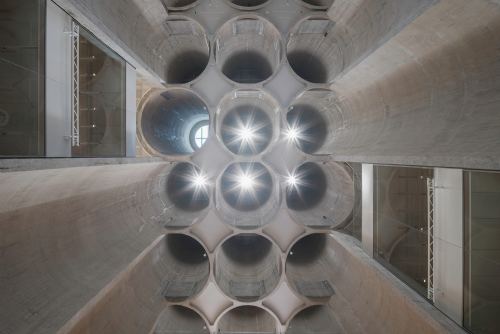
The Royal Institute of British Architects (RIBA) has announced the 34 winning projects of the RIBA International Awards for Excellence 2026.
Recognising inspiring architecture across 15 countries and four continents, this year’s cohort responds directly to urgent social, environmental and urban conditions across the globe.
All winning projects are now in contention for the shortlist of the prestigious RIBA International Prize, one of architecture’s highest accolades.
The winner will be announced at the RIBA Stirling Prize celebration in October at Old Billingsgate, London.
Whether addressing climate, migration, housing, rapid urbanisation, or infrastructure, the awarded projects demonstrate how thoughtful design can positively impact everyday life and help build a more equitable and resilient future.
The winners showcase how existing structures can be reimagined as vibrant destinations for culture, community and civic life.
In Norway, Kunstsilo by Mestres Wåge, BAX and Mendoza Partida transforms a former grain silo into a contemporary art museum, while Switzerland’s Transformation Warmbächli by BHSF Architektur and Städtebau reuses a former Chocolat Tobler warehouse for cooperative housing.
Similarly, Rockbund Shanghai by David Chipperfield Architects and Arquitectonica converts a historic neighbourhood into a modern cultural district connecting the area with the riverfront and park, while Taoxichuan Ceramic Culture Industrial Park by Jie Zhang, Beijing An-Design Architects and THUPDI revitalises two abandoned ceramic factories in China’s porcelain capital into a thriving cultural and creative district.
Climate-responsive design and the use of local materials are also central to this year’s winners, featuring natural ways to cool buildings and lower their carbon output.
In France, Château de Beaucastel by Studio Mumbai and Studio Méditerranée uses natural airflow and shade to create a naturally cooled winery that honours its historic setting.
Parikrama by SPASM Design Architects in India uses shaded walkways and natural ventilation to deal with the hot temperatures of the region.
In Australia, Burnt Earth Beach House by Wardle transforms the site of a former beach shack into a multi-generational family home, using handmade terracotta to respond to the demands of its exposed coastal setting, while Vietnam’s Urban Farming Office by VTN Architects wraps its exterior in vegetation to cool the building while producing local food in the heart of the city.
Norway’s The Plus by BIG – Bjarke Ingels Group joins sustainability highlights as a carbon-neutral furniture factory and public park built from local timber that uses solar power and rainwater to cut its energy demand by up to 90 per cent.
Winning projects also demonstrate how design is being used to strengthen communities by creating new spaces for learning and culture.
In Uganda, the Bidi Bidi Performing Arts Centre by Hassell provides a vital new space for arts and community within one of the world’s largest refugee settlements, while Australia’s Darlington Public School by fjcstudio integrates Indigenous heritage directly within a modern classroom setting.
The importance of community also extends to public institutions.
BRAC University by WOHA transforms a Dhaka landfill into a vibrant and climate-conscious educational hub, while Shanghai Library East by Schmidt Hammer Lassen redefines the library as a “collection to connection” model, housing 4.8 million books with a largely open, publicly accessible landscape.
In Beijing, the Performing Arts Center by Schmidt Hammer Lassen and Perkins and Will reactivates the Tongzhou waterfront through three monolithic venues for opera, theatre and music, inspired by the site’s industrial heritage.
Neil Gillespie, Awards Group chair, said: “What connects this year’s winners is a strong sense of generosity towards people, place and the future.
“These projects demonstrate a confidence in architecture’s ability to create delight and dignity while working within existing constraints, whether environmental, social or economic.
“Rather than relying on spectacle, they show the value of thoughtful, enduring design that is rooted in context and capable of enriching everyday life.”
Chris Williamson, RIBA president, said: “This year’s RIBA International Awards reflect the breadth and ambition of contemporary architecture at its best, through work that is globally diverse yet united by a shared commitment to improving how people live.
“What has stood out has been not only the quality of individual projects, but the clarity of thinking behind them.
“Across sustainability, community-building and cultural identity, architects are responding in inventive and often unexpected ways, and the winners offer a compelling snapshot of where the discipline is heading.”
Photo credit: Pedro Pegenaute Esparza